

In today’s connected world, understanding how fiber optic systems work is the foundation for making smarter network decisions. Even seasoned engineers often revisit the basics, because clarity at the core leads to more reliable systems in the field.
When I joined the ICT industry, I quickly realized that many professionals — whether they came from electrical, control, or power systems — could benefit from a clear explanation of what fiber really is and how it differs from traditional cabling. This article distills that knowledge and connects it with the latest innovations from Heizka, a global brand known for premium cabling and smart connectivity solutions.
From Copper to Light — The Core Difference
Traditional copper cables transmit data using electrical signals, while fiber optic cables use light. This single difference changes everything.Because fiber optic cables transmit data as pulses of light instead of electrical currents, they eliminate the common limitations of copper cables:
- Heat buildup in large bundles
- Signal degradation over long distances
- Electromagnetic interference
- Bandwidth bottlenecks in high-speed environments
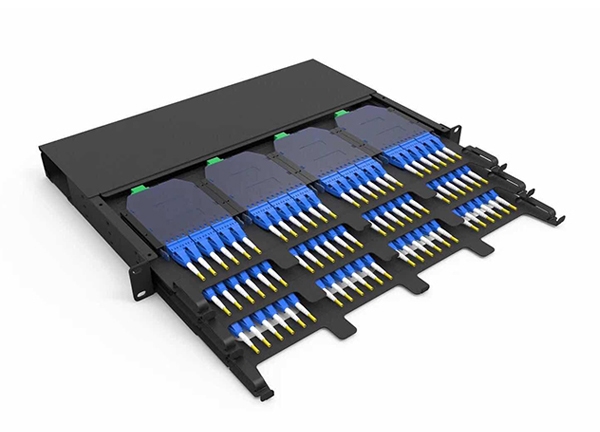
Heizka’s MPO/MTP high-density fiber solutions are engineered specifically to overcome these challenges. By using ultra-low-loss glass cores and precision connectors, they deliver 40G/100G/400G performance with minimal signal loss — ensuring reliable, interference-free operation even in Tier-4 data centers.
How Fiber Optics Actually Work
A fiber optic cable carries light through an extremely thin glass core surrounded by multiple protective layers.
- Core: The light-transmitting glass center.
- Cladding: Keeps the light inside the core by reflecting it inward.
- Coating & Buffer: Prevents scratches and adds flexibility.
- Armoring & Jacket: Protects against mechanical stress and environmental damage.
Heizka’s indoor/outdoor fiber lines (like the HEFOLN040PE series) feature reinforced LSZH and PE jackets, allowing flexibility in harsh environments while maintaining bending integrity and optical clarity.
Singlemode vs. Multimode — Choosing the Right Type
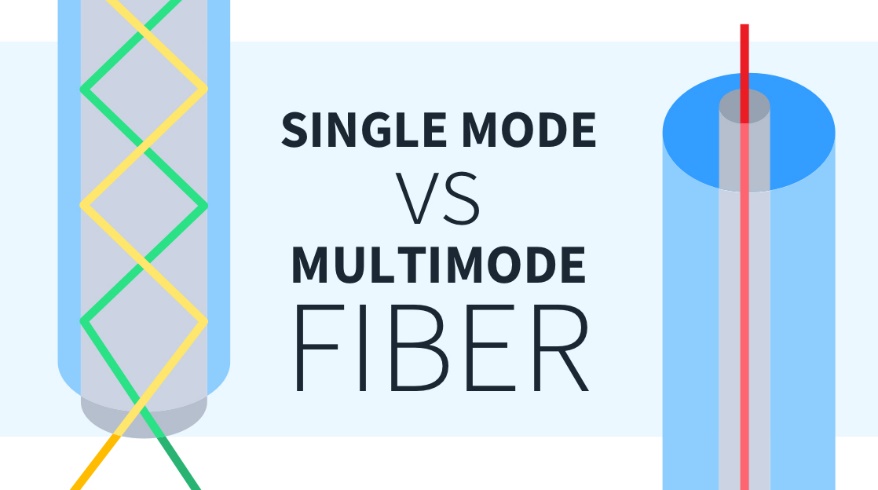
Fiber optic cables come in two major types:
- Singlemode (SM):
Uses a very small core, allowing a single beam of light to travel farther — ideal for long-distance backbones. Heizka’s OS2 singlemode fibers can reach several kilometers with near-zero attenuation. - Multimode (MM):
Features a larger core to allow multiple light paths, perfect for short-range, high-speed LANs. Heizka’s OM3 and OM4 fibers (aqua or violet) pair seamlessly with SC-LC duplex patch cords like HEAFS4U3LZ3, designed for 10G and 40G data center environments.
Connection methods vary: mechanical splicing joins fibers via connectors, while fusion splicing welds them with an electric arc for minimal loss.
Connectors and Density
The connector defines how fibers meet devices.
Common types include:
- LC connectors: Compact, easy to install — Heizka’s default for high-density racks.
- SC connectors: Reliable and widely compatible.
- MPO/MTP connectors: Handle up to 12 or 24 fibers per plug for modern data centers.
Heizka’s pre-terminated MPO cassettes enable plug-and-play deployment, cutting installation time by up to 70%.
Managing Fiber Infrastructure
Just as copper systems use patch panels, fiber systems rely on cassettes and optical distribution frames (ODF) to organize and protect connections.
Heizka’s ODF series and modular rack cassettes simplify high-density management, maintaining bend radius and reducing clutter. These are particularly useful for smart-rack deployments where power, temperature, and network cables share space efficiently.
The Big Picture — Why Fiber Matters Now
As data consumption explodes, fiber has become the backbone of reliable ICT and building automation systems. It’s faster, safer, and more scalable than copper — but it requires precision in both design and execution.
That’s why Heizka’s integrated ecosystem — from Cat6A/Cat7 copper cables to MPO fiber systems and smart PDU monitoring — delivers unified performance. Every component is designed to meet international standards (CE, RoHS, UL) and backed by a 25-year system warranty.
Final Thoughts
Understanding fiber optics isn’t just for beginners — it’s the foundation for any engineer aiming to build resilient, future-ready networks. And with Heizka’s engineering expertise and global manufacturing quality, every meter of cable becomes part of a smarter, faster, safer connection.
Innovation for Connection — Heizka.