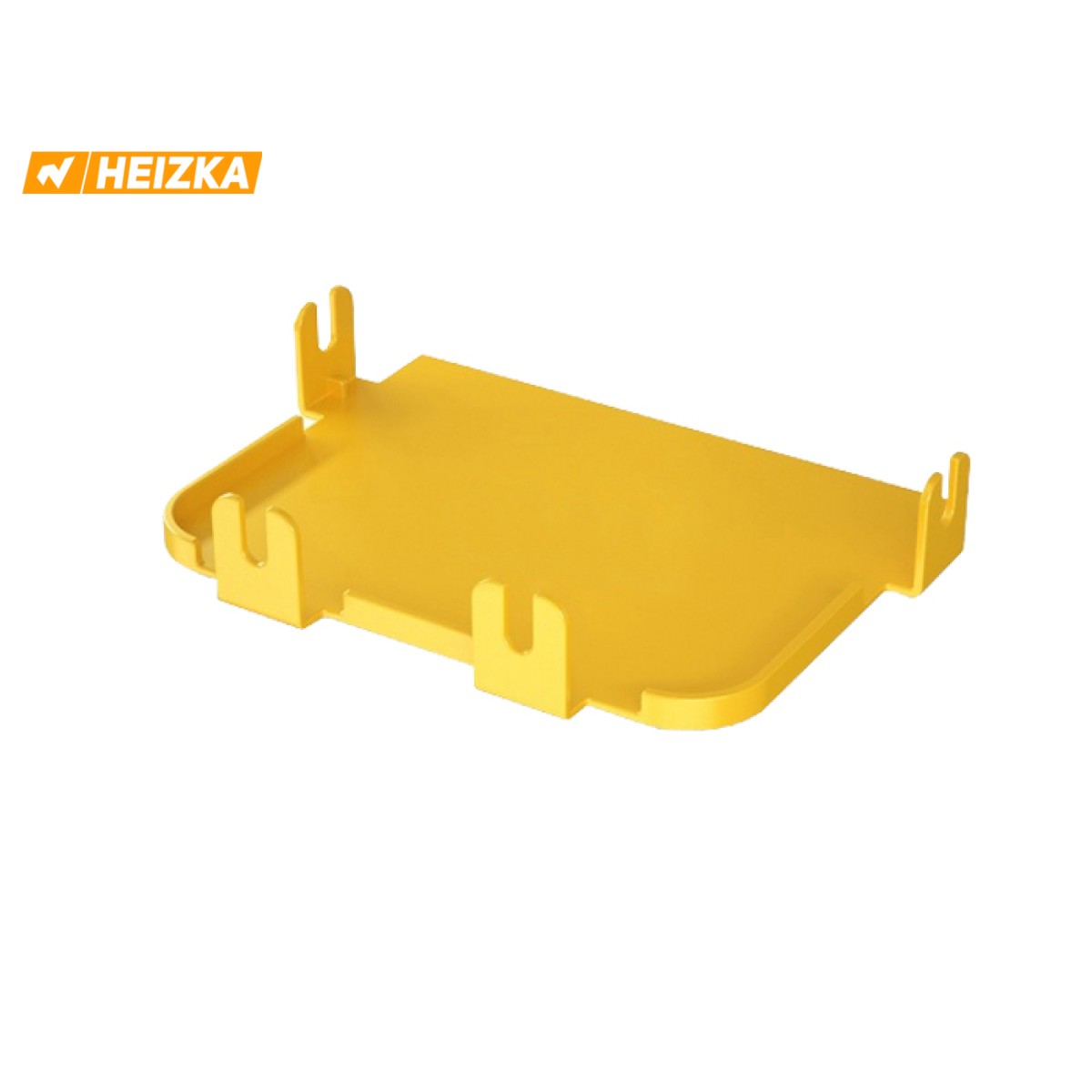
Overview
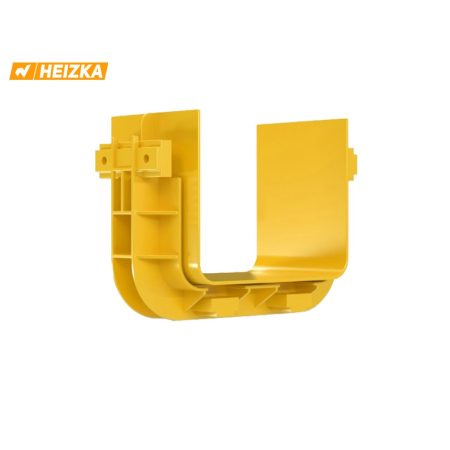
The Heizka End Cap Kit closes off the open end of a channel or fitting, finishing the run neatly and preventing dust ingress and accidental damage to the fibre at the termination point.
End caps are supplied for every raceway size in the system, from 60 × 60 mm through to 600 × 100 mm.
Key Features
- Closes the open ends of channel and fittings.
- Available across the 60, 120, 240, 360 and 600 mm series.
- Gives the run a finished appearance and keeps dust out of the pathway.
- Self-extinguishing plastics – flame-retardant material to UL94-V0.
- High-visibility yellow to match the rest of the system.
Technical Specifications
| Series | Item No. | Name | W (mm) | H (mm) | Overall (mm) | Colour | Material |
|---|---|---|---|---|---|---|---|
| 60 | 311G0 | 60mm End cap | 60 | 60 | 68 × 68 × 27 | Yellow | PVC/ABS |
| 120 | LL23A | 120mm End cap kit | 120 | 100 | 135 × 116 × 25 | Yellow | PVC/ABS |
| 240 | LL26A | 240mm End cap kit | 240 | 100 | 270 × 25 × 116 | Yellow | PVC/ABS |
| 360 | LL28A | 360mm End cap kit | 360 | 100 | 390 × 26.5 × 115 | Yellow | PVC/ABS |
| 600 | 312G0 | 600mm End cap kit | 600 | 100 | 641 × 22.5 × 121 | Yellow | PVC |
Installation notes
- 360 series: installation needs T-shape screw and twist head nut, 5 pieces each.
- 600 series: installation needs T-shape screw and twist head nut, 7 pieces each.
- Flame retardant: UL94-V0.
Dimensions are quoted from the Heizka Fibre Management System catalogue. Specifications are subject to change without notice – please confirm critical dimensions with Heizka before ordering.
Standards & Compliance
- Flame retardancy: UL94-V0 self-extinguishing plastics.
- Material: PVC / ABS mouldings; steel support hardware is electroplated zinc with a powder-coated finish.
- All plastic-based components are specified to be RoHS compliant.
- Colour: high-visibility yellow, identifying the fibre pathway.
- Environment: indoor use in data centres, telecommunication exchanges and equipment rooms.
Where End Caps Are Needed
Every open end in a fibre route is a point where dust can enter and where a patch cord can be caught or crushed. An end cap closes that point. On a typical project end caps are used at:
- the dead end of a main run, past the last cabinet;
- the unused branch of a tee or cross that is reserved for future expansion;
- a short spur that will be extended in a later project phase;
- any channel end left open after a fitting is removed during a re-route.
Closing reserved branches with end caps keeps the route sealed today while leaving the fitting in place, so a future extension only needs the cap removed and a new channel section fitted.
Sizes and Part Numbers
| Raceway size | Part number | Item |
|---|---|---|
| 60 mm | 311G0 | End cap |
| 120 mm | LL23A | End cap kit |
| 240 mm | LL26A | End cap kit |
| 360 mm | LL28A | End cap kit |
| 600 mm | 312G0 | End cap kit |
The published list covers the 60, 120, 240, 360 and 600 mm sizes. If your route uses the 150 or 300 series, confirm the matching end cap with Heizka before ordering.
Counting End Caps in a Takeoff
- Mark every channel end on the route drawing.
- Remove the ends that finish at a fitting, a trumpet spillout or a wall penetration that is sealed by other means.
- Add one cap for each unused branch of a tee or cross.
- Group the count by raceway size, because each size has its own part number.
Related Products
- Vertical tee and horizontal tee — branches that often need a cap on the reserved side.
- Trumpet spillout kit — the fitting to use where cable must leave the route, rather than an open end.
- 120 series and 240 series straight sections.
Back to the Fiber Raceway System.
Typical Applications
- Data centres and server rooms – fibre patch cord routing between racks and rows.
- Telecommunication exchanges and central offices.
- Optical distribution frames (ODF) and fibre cross-connect areas.
- Any installation where fibre must be segregated from copper services and protected end to end.
Download
Catalogue extract for this product, taken from the Heizka Fibre Management System catalogue:
Heizka Cable — Designed in the USA, distributed in 20+ countries worldwide.